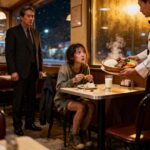
(1910, Puebla) La macabra historia de la monja que tuvo trillizos del Papa
Year 1910, Puebla de Zaragoza. A woman stopped praying forever in the early morning of March 13. Not because I would have lost faith, but because that he carried in his belly had stolen the right to ask mercy to God. Her name was Sister Evangelina of the Sacred Heart. I was 28 years and had been closed for nine years convent of Santa Rosa de Lima, one of the most severe in the city.
The nuns from the cloisters they never left, they did not receive visits, they did not touch hands that were not those of Christ. But someone had knocked to Sister Evangelina and now, under black habits, his body hid three lives that should not exist. Before we start, tell us since country and city you are listening to us.
We want to know how far these go voices and at what time of day darkness finds you. The story that you’re going to hear was reconstructed from of documents that remained sealed for 113 years. In 2023, during the restoration works of the convent of Saint Rose of Lima, a bricklayer called Ricardo Morales found a metal box rusty embedded in the north wall of the cell number seven.
Inside there were three things, a rosary of black beads with dark spots that tests chemicals identified as blood human, a worn leather notebook, written in tiny, shaky handwriting, and three locks of hair children tied with gold thread. The notebook was Sor’s diary Evangelina. What was written there It should never have been read by human eyes.
But she wrote it knowing that some One day someone would find it. Because there is secrets that weigh more than silence. There are faults that need to be confessed, even if it is to eternity. The first diary entry was dated June 8, 1909. Today came the visitor They told us it was a very important man, who came directly from Rome, that we had to treat him with the utmost reverence because represented the will of the Holy Father.
His name was Monsignor Alessio Cavalcanti. He had darker eyes that I have seen in my life. The visitor apostolic was a figure of enormous power in the hierarchy ecclesiastical. His role was to supervise religious life in convents. correct doctrinal deviations and ensure that cloistered orders maintain their spiritual purity. Monsignor Cavalcanti arrived in Puebla in June 1909 with credentials impeccable.
He had served in the congregation for the doctrine of the Faith for 12 years. He had been secretary staff of the cardinal secretary of State and according to official documents which he presented to the bishop of Puebla, He came with a special mission: investigate rumors of moral relaxation in the female convents of Mexico.
The mother superior of the convent of Santa Rosa, Sister Catalina de los Dolores, He received the visitor with the humility that it was expected. Welcome, monsignor. Our house is the house of God. and you He is his envoy. Cabalcanti remained in Puebla for 8 months. During that time he visited the convent three times a week.
Conducted private interviews With each nun, I reviewed the books of accounts, supervised the exercises spiritual and spoke a lot, a lot with Sister Evangelina. In the diary she describes like this. The monsignor asks me things that no priest had told me asked before about my life. before enter the convent on my dreams, about the temptations I face in the loneliness of my cell.
At first I felt uncomfortable, but he says that deep confession is necessary for achieve true holiness, which I must open my soul completely to him, because he It is God’s instrument for purify me The interviews began in the parlor, the small room with a fence where the nuns they could talk to visitors authorized.
But after three weeks, the mother superior granted Cabalcanti a special permission. I could interview the nuns in the sacristy without the fence in the middle. For facilitate spiritual work, explained the monsignor Nobody questioned anything. He He was the apostolic visitor. He represented the Pope. The convent of Santa Rosa de Lima had been founded in 1747 by the order of the Dominican sisters of penance.
It was a place of perpetual closure. The nuns who entered there they pronounced vows that the separated from the world forever. No They saw their families, they did not receive news from abroad, They did not touch objects that had not been blessed. They lived in 3 m² cells, They slept on wooden cots. They ate a Once a day, they prayed for 18 hours.
The convent was a living death, a chosen death, a holy death, or that it was supposed. Sevangelina had entered to the convent at the age of 19. daughter from a wealthy family from Puebla, had rejected three proposalsof marriage to dedicate his life to God. He was intelligent, he read Latin, copied religious manuscripts with a perfect calligraphy.
The Mother Superior I had described her as an example of virtue. But now reading your diary, researchers discovered something more. Sister Evangelina was deeply naive Raised in the isolation of religious life, had no defense against the manipulation of a man trained in the arts of persuasion clerical In the Archive Diocesan of Puebla, a researcher named Dr.
Mauricio Estrada found in 2024 a file that had been classified as administrative material without historical relevance. Inside were copies of the letters that Monsignor Cavalcanti sent to Rome during his stay in Mexico. one of them, dated August 1909, said: “Eminence, work in New Spain progresses as planned. I have identified several suitable subjects for the project that his holiness approved in private session.
women consecrated are ideal, isolated, obedient, without contact with the world outside. The selection is complete. The procedures will begin at coming weeks. I assure you that the maximum secrecy will be maintained. No one will know, no one will question. everything It will be for the greater glory of God.
Your humble servant, Alessio Cavalcanti. Doctor Estrada tried track the recipient of the letter. The title Eminence was reserved for cardinals, but not in the Vatican There is no record of any cardinal has authorized a mission special in Mexico in 1909. What’s more, not There is a record that Monsignor Alesio Cavalcanti has never been a Vatican official.
His name is not appears in the archives of the Congregation for the Doctrine of the Faith, does not appear in the records of the Secretary of State, does not appear in nowhere. Alessio Cavalcanti was a ghost, a man with credentials perfect that did not exist, which It means that someone somewhere had created. He had given him an identity, he had given documents, had given him access to convents where women could not say no.
But who and for what? That question led Dr. Estrada to investigate deeper. He reviewed the records of other convents in Mexico during the same period and found something that left him breathless. Between 1908 and 1911, 15 cloistered convents in Mexico received a visit from envoys Vatican specials. They all arrived with credentials impeccable.
Everyone remained various months. They all conducted interviews private spirituals with the nuns. And in 13 of those 15 convents there were internal reports of illness inexplicable among the young nuns, diseases that required isolation immediate, illnesses of which never was spoken publicly. In the file of the convent of the Purísima Concepción In Guadalajara, Estrada found a note written by the mother superior in 1910.
Three of our sisters have been transferred to a retirement home delicate health reasons. we can’t receive visitors during the next months. This is in order of the ecclesiastical authorities superiors. In the convent of the nasturtiums in Morelia, another note Similarly, Sister María del Carmen has been sent to a spiritual retreat of indefinite duration.
His family does not will be informed. In the convent of Santa Clara in Querétaro, sisters in special situation have been attended by discreet doctors. The details of his condition will not be recorded in the archives of the convent. A pattern, a network, a coordinated operation that covered everything the country for 3 years.
and then in 1911 with the beginning of the Revolution Mexican everything stopped. The visitors disappeared, the reports ceased and many convents were looted, burned or closed during the armed conflict. The files were scattered, lost, They burned and with they evidence of what had happened.
but Evangelina had left her testimony hidden in a wall waiting. The diary not only contained his story personnel, also included names, dates, descriptions of others men who had arrived at the convent with Cabalcanti. The monsignor did not come alone, he wrote in an entry from July 1909. brought to another man I called him doctor.
It wasn’t priest. He was wearing civilian clothes. had thin hands and very clean nails. He spoke little. I was just observing. Once it I saw taking notes while the monsignor He talked to me. He wrote quickly, with tight handwriting, as if documenting something scientific. That gave me fear.
Made me feel like an animal observation, a doctor, documenting that The researchers reviewed the medical records of the time and They found the name of a doctorItalian, Giuseppe Marchetti, who had worked in Mexico between 1908 and 1912. Marchetti was a specialist in gynecology and obstetrics. There was published several articles in European medical journals on methods controlled fertilization and applied eugenic selection.
Marchetti disappeared from public records after 1912. There is no certificate of death, no exit records of the country, it simply ceased to exist like Cabalcanti, like Sor’s children Evangelina, like so many others who were erased from history. What happened in those private sessions are described in the newspaper Conad that freezes the blood.
Entry from 14 September 1909. Today the monsignor touched my hand. He did it while he was talking to me about the importance of absolute obedience. He said that the greatest saints were those who They never questioned the will of their superiors. That doubt is poison soul His hand was warm, mine trembled He told me that I had been chosen for something special, that God He had plans for me, but he had to trust, that he had to obey without understand.
When I left the sacristy, My legs were barely supporting me. October 1909. The diary entries are They become shorter, more confusing. Not anymore I know what sin is. The monsignor says that what we do is holy, it is a secret sacrament , which only the chosen ones can understand, that my body is a temple and he is consecrating that temple to one divine mission.
But when I close the eyes, I only feel shame. one shame so great that it suffocates me. November 1909. Silence. there is no tickets for three weeks and then this. I am pregnant. I knew it before my body confirmed it. It I knew why the monsignor changed. Not anymore He comes to see me, he doesn’t talk to me anymore. When we pass each other in the hallways, look away.
I told the mother superior that I felt sick. It allowed me to stay in my cell during services. But I can’t hide this for a long time. God My, what have I done? In December 1909, Monsignor Alessio Cavalcanti ended his apostolic visit to the convent from Santa Rosa. He presented his report to bishop. Everything was in order.
The nuns They lived in perfect observance of the rule. There were no moral deviations. Then he announced that he had to return to Rome. Urgent Vatican Matters they claimed. Nobody saw him again. but Sister Evangelina was still in her cell, that grew inside her would disappear with silence. Entrance of January 3, 1910.
I can no longer hide the changes in my body. The Nausea betrays me every morning. The habits tighten around my waist. Yesterday Sorin Inés looked at me with suspicion. He said my face looked different, more round, paler. I told him which was fasting. She didn’t believe me. February 1910, Mother Superior He summoned Sister Evangelina to his office.
What happened there is documented. only in Evangelina’s diary, but also in a letter that the mother superior wrote to the bishop days after. A letter that never was sent, a letter that was next to the notebook in the same metal box. Reverend Father Bishop, with my heart broken and the deepest shame, I must inform you of a situation that endangers reputation of our holy house.
Sorangelina Sacred Heart is pregnant. she insists that the father of the child is Monsignor Alesio Cavalcanti, the apostolic visitor who supervised our convent for 8 months. I don’t I know what to believe. The girl is clearly disturbed. Talk about divine revelations, of secret missions.
He says that the monsignor He told him that he was fulfilling the will of the Holy Father. But monsignor Cavalcanti is a man of God, a Vatican server. It is impossible that however, the fact remains. Sister Evangelina is pregnant and if she is news comes out of the convent, we will be destroyed. I beg you, Father Bishop, to tell me how to proceed, because I don’t have answers, I’m just scared.
The letter never reached the bishop, because two days after writing it, the mother superior received a visit. A priest arrived at the convent midnight. He knocked on the service door, He didn’t give his name, he just showed a document sealed with the coat of arms of the Vatican.
He came to talk to the mother superior for 3 hours. nobody knows What did he say to him? But when the priest was, the mother superior burned the letter who had written to the bishop and ordered that Sister Evangelina was transferred to a isolated cell in the most remote wing of the convent. No one should see it no one should talk to her.
This is order of the Holy Father. Sor Evangelina remained locked up for two months. They brought him food once a day. an old and half-deaf nun whoI didn’t ask questions. The diary describes those days like a slow death. I’m not a nun anymore, I’m a prisoner, a hidden shame. I pray but the words get stuck in me the throat Because if this is will of God, then God is cruel.
And if not it is, then I have been deceived by him demon disguised as a holy man. No I know which of the two options is worse. March 1910. Sor’s body Evangelina could no longer hide the true. Her belly was a mountain under habits, his clumsy movements and painful And then one night he felt something that filled her with terror.
No It was a single life that grew inside Of her, there were three. The pains They began at dawn on March 13. They were not normal pains, it was as if something inside me would like to come out tearing me apart I screamed, but no one came. The walls of this cell are thick and the nuns have orders not to approach.
I’m alone, completely alone. And they are doing something, something that shouldn’t exist. what happened that night in cell number seven of the convent of Santa Rosa de Lima was reconstructed from the last diary entries. written entries with increasingly trembling handwriting, stained with blood and sweat. Three babies were born between shadows, three children, men perfectly formed.
Evangeline Sun He wrapped them in the sheets of his bed, held them to his chest, He sang them a prayer that his mother I had taught when I was a child and while he was rocking them he understood something terrible. Not those kids They would have a name, they would not be baptized, would not exist for the world, because the Vatican could not allow they existed.
Entry of March 14, 1910, written in barely legible handwriting. The men came at dawn. No They were priests, they were something worse, something that has no name in this world. They took my children from me, three, one by one. I begged them, I begged, I told them that they were innocent, that They were not to blame for the sins of their parents.
One of the men looked at me with something similar to pity and told me, “Sister, these children were never born and you were never pregnant. That’s what What will you say if you want to stay alive? I They were left alone in the cell with the sheets stained and the silence deeper than I have known My children left and I I was left here alive, but dead inside.
The last diary entry It is dated three days later. I have made a decision. I’m going to write everything. I’m going to hide this notebook where no one will find it for many years Because someday someone must know true. My children existed for 3 hours they existed, they breathed, they cried, They lived and then were erased as if They would never have been real.
But they were real and I loved them for 3 hours I loved with everything I have. May God excuse me But above all, let him forgive to the men who did this, because I can’t. Sister Evangelina del Sagrado Heart died 6 months later officially tuberculosis. your body He was buried in the cemetery convent, without tombstone, without name, like if it had never existed.
But before dying he managed to hide his diary and for 113 years that newspaper waited in silence, keeping the secret of three lives that were stolen before to even be able to breathe the air world. In 2023, when Ricardo Morales opened that metal box, forensic investigators examined the content.
locks of hair They were subjected to DNA tests. The results confirmed that they belonged to three different individuals: males, brothers and something more. In one of the locks were found traces of a chemical substance used in rituals of extreme unction. someone had baptized those children in secret. Someone had given them the sacrament before they disappeared.
The question What no one can answer is, where are their bodies? What happened to them after they were torn from the your mother’s arms? And the most important question darkest of all, how many other nuns Did they live the same? How many others secrets are embedded in the walls of ancient convents? Part completed.
Do you want me to continue with the next part? Dr. Mauricio Estrada dedicated 2 years of his life to investigate the case of Sor Evangelina. What he discovered led him to question everything you thought you knew about the religious history of Mexico. In one interview for a history podcast In 2024, Estrada said something that left ice cream to the listeners.
we are not talking about isolated abuses. We are speaking of a systematic operation, planned, coordinated at the level international. someone was using Mexican convents as laboratories and the nuns were the subjects of experimentation. Experimentation of what? That question led to searching in files that no onehad reviewed in decades.
And in the General Archive of the Nation, in a box marked as correspondence ecclesiastical 19091912, He found something that changed everything. It was a medical report written in Italian, signed by Giuseppe Marchetti, dated February 1910. The report was titled Observations on pregnancies multiple induced in female subjects of closure.
Multiple gestations induced. The report was technical, cold. He described with scientific precision the procedures performed on 15 women for a period of 18 months. Of those 15, nine had achieved pregnancies and of Of those nine, three had developed multiple gestations: twins, triplets, quadruplets. The report did not use names, only numbers.
subject one, subject two, subject three, but there were dates and places and physical descriptions that allowed identify women. Sister Evangelina was subject seven, woman of 27 years old, healthy complexion, no history of illness hereditary, virgin at the moment of the first procedure. Answer positive at first insemination. Triple pregnancy confirmed this week 12.
The subject shows resistance considerable psychological, requires frequent sedation. It is recommended total isolation during the period end of pregnancy to avoid incidents that compromise the project. Note: The subject has developed attachment emotional towards the product gestation. This was not anticipated and represents a problem that must be addressed at the time of delivery.
Attachment emotional towards the product gestation. That’s what they called the love of one mother for her children. a problem, something that had to be addressed. Dr. Estrada He read the entire report three times. I felt more and more nauseous. What else It disturbed me, he said in the interview, It wasn’t cruelty, it was coldness.
These men did not see the nuns as human beings, they saw them as containers, such as incubators. and everything was justified with language scientific and religious. everything was for greater glory of God. but the question still no response. For what? What was the purpose of creating pregnancies? multiples in cloistered nuns? The answer was on the last pages of the report in a section titled Conclusions and future applications.
The results confirm that it is possible induce multiple pregnancies in selected female subjects through insemination techniques controlled. The success rate is 33%. significantly higher than the natural incidence of pregnancies multiple. The cloistered women present obvious advantages for this type of research: isolation of outside world, obedience conditioned, inability to communicate experiences to third parties and absence of legal or family claims.
If recommends continuing the project in other regions. The data obtained is valuable for future applications in one, selection programs eugenic. Two, heritability studies of physical characteristics and intellectuals. Three, development of assisted reproduction techniques. The biological material obtained, specimens, resulting from pregnancies multiple, has been preserved for studies later, according to the protocols established by the commission, biological material, specimens, resulting. That’s what they called babies
Sister Evangelina, had been preserved. Dr. Estrada dropped the document. His hands were shaking. during For several minutes he could not move because I had just understood something horrible. The Sorvangelina’s children had not been murdered. They had been taken, preserved, studied as laboratory specimens.
The diary of Sister Evangelina did not end with the March 17 entry. There was more pages, pages that had been plucked and hidden separately inside the metal box. When the restorers found them, they were so fragile that they almost fell apart touch them, but they managed to photograph them. And what was written there was the most heartbreaking testimony that had been found.
Entry of the 20th March 1910. I listen to them on the nights. My children cry somewhere of the convent. I know this is impossible. I know they took them, but I swear by God I heard you. A sharp cry, three different voices, as if They will call me from far away. I asked him to the nun who brings me food if she has heard something.
He looked at me with terror and left without responding. up to date Next came another nun, one more older, more deaf. Nobody wants to talk to me. I am a shame, a stain on the purity of the convent. but my children They existed and they still cry. I still they search. The researchers considered that these entries were the product of psychological trauma that Sister Evangelinahad suffered.
auditory hallucinations, a broken mind trying to process unbearable pain, but there was something strange. Other nuns of the convent They also reported hearing babies cries during the months of March and April 1910. In the convent archive there is a letter from Sister Mercedes de la Cruz, dated 2 April 1910 addressed to the mother superior Reverend mother, with everything Respect, I must inform you of something that deeply disturbing.
During the last two weeks, several sisters have reported hearing children crying during the silent hours of the night. The sounds seem to come from the basement or walls. It’s difficult determine exactly. Sister Inés says What are the winds? Sort Teresa says that they are rats. But I know what I heard, mother.
And they are not winds or rats, they are cries of newborn babies born. Is there anything I should know? Any explanation you can give me for ease my conscience? The answer of the mother superior was brief and blunt. Sister Mercedes, there are no babies in this convent. What you hear is product of your imagination and lack of dream.
I order you to increase your hours of prayer and reduce your hours of rest. The devil works on minds idle. Don’t mention this again topic, but the crying continued for weeks and then They abruptly stopped. In May 1910, the convent of Santa Rosa experienced something that official records described as a plague of rats.
Several sectors had to be fumigated. The basement was sealed temporarily and when it reopened the smell had changed. Sorbeatriz de los Ángeles wrote in her personal diary, “The basement smells like formaldehyde like a hospital, like a place where bodies are preserved. what did they keep down there? And why now everything is empty? Juspe Marchetti did not disappear without leaving trace.
In 2024, a researcher Italian named Dora Chiara Rosini I was reviewing medical records historical at the University of Bologna when he found a reference to such a. G. Marchetti in a study on twins made in 1915. The studio was part of a larger project funded by European private institutions. Your The objective was to investigate the heritability of physical characteristics and intellectuals in twins and triplets.
To carry out the study they needed subjects, many subjects and They specifically needed twins and triplets of controlled origins. controlled as the study did not specified, but mentioned that the specimens were obtained through international collaborations with religious institutions in America Latina. Dr.
Rosini contacted Dr. Estrada, shared information and together they began to put together a puzzle that spanned two continents and several decades. what they found was this. Between 1908 and 1912, someone had organized a network of reproductive research that operated under the guise of apostolic visits. The subjects were cloistered nuns.
The results were multiple babies and those Babies were sent to Europe to long-term studies. There is no evidence that these babies were murdered, but there is no evidence that they have lived normal lives. The records mention them as specimens, subjects or material study, never as people, never with names.
In the University archive of Bologna, Rosini found photographs of some of these specimens. Children between one and 3 years old, photographed in clinical settings, without toys, no normal clothes, just robes white numbered. One of the photographs had a note on the back. Mexican triplets. Origin: Puebla, age, 18 months.
State, healthy, cognitive development. inside normal parameters. The photography showed three identical children standing in front of a white wall, looking at the camera with huge, empty eyes. Rosini tried to trace what had happened to those children, but the records They ended abruptly in 1918. With the end of the First World War and the Spanish flu pandemic, many files were lost or destroyed.
The children simply disappeared from the records as if they had never existed. But Sister Evangelina knew that had existed and his diary confirmed. Entry of May 15, 1910. I had a dream. Or maybe it wasn’t a dream. Not anymore I distinguish between what is real and what my mind invents to protect me. I saw my children.
They were in a white place, very white, too much white. There were no colors, there were no windows, only white walls and men with robes that watched them. my children They cried, but no one carried them, no one I comforted them, they just looked at them. They took notes, they measured them as one measures a animal.
One of my children saw me, He extended his arms towards me and II tried to reach it, but there was glass between us, a glass that could not break no matter how hard it hits. I woke up screaming. The nun who watches over me came running. He gave me something to drink, something bitter and went back to sleep. But before Losing consciousness, I heard his voice.
The voice of the nun whispering, it is better this way. You better not remember what is what I should not remember, what else made my mind is trying forget. The medical records of Sorevangelina show that sedatives were administered regularly for 6 months. laudanum, morphine hydrochloride, substances that in high doses could cause amnesia bias and confusion.
they were erasing your memories chemically so that forget what he had seen, what had lived. But she continued secretly writing with a determination that only a mother could have. Entry dated August 4, 1910. I have decided something. If I can’t recover to my children in this world, I will get it back in the other. I’m letting myself die little by little, rejecting food, rejecting medicines, rejecting everything.
The mother superior says that I am sick, which is tuberculosis, but it is not tuberculosis, it’s a choice. When die, my soul will search for my children. The I will find wherever they are and this Maybe no one will be able to separate us. This is my last will, my last act of love. May God forgive me for what I am going to do do.
But if God doesn’t forgive me, then I prefer hell, because at unless there I will be far from men who They use his name to justify what unjustifiable. Sorvangelina died on the 24th September 1910. He was 28 years old. Your body weighed 38 kg. The certificate of death says pulmonary tuberculosis advanced. But the newspaper says otherwise.
It says suicide by starvation. says one mother who preferred death to living without their children. His body was buried without ceremony, without tombstone, in a common grave from the convent cemetery. During years, no one knew where it was exactly, until the works of restoration of 2023 they exposed the old cemetery and there, in a grave without a name, they found human remains.
The DNA tests were conclusive. She was an evangelical sister, but the most extraordinary was what they found along with his remains. Buried with her, There were three small silver objects, baptism medals, each engraved with a date, March 13, 1910. And each one with a different name, Gabriel, Rafael, Miguel.
The names of the archangels, the names that Sor Evangelina had given her children in secret, names that no one else I knew the names she had taken to the grave. Who had put those medals there? who had baptized those children? Who had them given names? The answer was in the last diary entry. one entry which was not dated, an entry written with a different, firmer handwriting, clearer. It wasn’t Sor’s handwriting.
Evangeline. My name is Sister Teresa Jesus. I was the convent nurse for 30 years. I saw things that I should never have seen. I was silent when I should have spoken and now, before I die, I must confess my sin I helped deliver Sor Evangelina. I received those three children. I held them for the first time.
I I heard his first cries and I baptized secretly with holy water I stole from the sacristy, with the names that his mother whispered before she fell unconscious. Gabriel, Rafael, Miguel. The men came at dawn. Men dressed in black. They were not priests, were not doctors, no I know what they were, but they had dead eyes.
They took the children alive, They put it in a wooden box with air holes, children They were crying and I didn’t do anything. I only saw how they took them away. Afterwards I They gave money. They told me to forget everything, that if I spoke my family would suffer the consequences.
And I was silent for years I was silent, but now I’m dying and I want someone to know the truth. I want someone to look for those children because maybe they still live, maybe They are still somewhere, maybe They can still be saved. Today is the 2nd of October 1910. If anyone reads this, please look for them. Look for Gabriel, Rafael and Miguel, the children of Sister Evangelina.
Find them and tell them that their mother loved them, that she died for them, who never forgot them. Sister Teresa of Jesus died 3 days after write that heart attack confession massive at 62 years old. His remains too They were found in the cemetery convent and next to them something unexpected, an identical rosary that of Sister Evangelina with stains of blood on the beads.
Whose was that blood? Of the children? Of Sor Evangelina? From the same draw? The DNA tests were conclusive. The blood belonged to three individuals different: men, brothers, the same ones whose hair had beenfound in the metal box, Gabriel, Rafael, Miguel. Their names had been erased from history, but their blood had remained.
silent testimony that they had existed, that they had been real. In 2024, Dr. Estrada and Dr. Rosini published an article set in history magazine Latin American doctor. The title was Eugenics and closure, the network hidden reproductive experimentation in Mexican convents. 1908-1912. The article caused a scandal international.
Various organizations nuns denied it. The Vatican issued a statement saying that no They had records of no operations that guy, but the documents were there. The letters, the medical reports, the diaries, the human remains, the blood on the rosary, everything was there. Impossible to deny, impossible to explain.
And yet the question still no response. What happened to Gabriel, Rafael and Miguel? Did they live, did they die, were they adopted? Were they studied to death? Nobody knows. The records end in 1918 and after, absolute silence. but there is something else, something that researchers found in the Archives of the University of Bologna.
Something that doesn’t fit, something disturbing. In 1950, a man named Miguel Ángel Cavalcanti donated a sum considerable amount of money to the university. The donation included a clause specific. The funds were to be used for research in genetics and heritability of twins. Michelangelo Cavalcanti, the surname of the fake monsignor and one of the names that sister Evangelina had given her children.
Coincidence or something more. Dr. Estrada tried to track down Michelangelo Cavalcanti, but found nothing, nor certificate of birth, or documents of identity, no photographs, just the donation and a name that connected the present with the past of a way that no one could explain. Part completed.
Do you want me to continue with the next part? In January 2025, the Dr. Mauricio Estrada received an email anonymous email. The sender used a temporary address that would self-destruct in 24 hours. The message was brief. Dr. Estrada, I have read your research on Sor Evangelina. I have information that can interest you.
My grandfather was one of the children. I can’t use my real name. There are people who don’t want this story to be count, but my family deserves to know the true. If you agree to meet with me, reply to this email in the next 12 hours later. It will be too late. Estrada responded immediately. You They gave an address in City of Mexico, a cafe in the Roma neighborhood, a specific time.
3 in the afternoon following Thursday. Estrada arrived on time. He waited 20 minutes. I was about to leave when a man of about 60 years old sat in front of him. “I’m Gabriel,” he said. man. Well, not me, my grandfather I bear his name. I’m Gabriel Angel Cortes The man placed on the table a yellowed photograph. It showed three identical children approximately 5 years old, standing in front to a white wall with robes numbered.
It was one of the photographs that Dr. Rosini had found in Bologna. “Where do I get this?” Estrada asked with a trembling voice. “From my grandfather’s house. He he kept all his life. never wanted to talk about her, but my grandmother told me some things before dying, things that they made me understand that my family He kept a terrible secret.
Gabriel Ángel Cortés was 62 years old. It was literature teacher at a private university, quiet man, normal life, but his family history It was anything but normal. my grandfather arrived in Mexico in 1925, he explained. I was 15 years old. Came from Europe, Italy according to the documents, but never He spoke Italian.
I didn’t have a family, no He had a past, just a name. Gabriel Montero. Montero was not his last name real, they gave it to him when he arrived. Part of his new identity. my grandfather was adopted by a rich family from Puebla, the Monteros, a very Catholic family influential, with connections in Rome. He lived with them until he got married.
had children, grandchildren. died in 1987, to 77 years old and never, never talked about his childhood. But when my grandmother died found things, hidden documents, photographs and a diary that he had began writing in his later years. A diary that never ended because illness overtook him earlier.
Gabriel He took out an old notebook from his backpack, He handed it to Estrada with his hands trembling. Read it and then tell me if my grandfather was crazy or what wrote it really happened. Estrada opened the notebook The first page said, “My real name is not Gabriel Montero. I don’t know what my real name is.
I don’t know Who were my parents? I don’t know where I was born I only know that the first 5 years ofI spent my life in a white place, a place without windows, without colors, without love. And I know I had two brothers, two brothers identical to me, Rafael and Miguel. But they didn’t come out from that white place, only me.
The diary by Gabriel Montero was fragmented, confused. It was written by a man I was losing my memory, but that desperately tried to hold on to memories that had been stolen. They called us by numbers. I was 7A, Rafael was 7B, Miguel was 7C. We never knew what those meant. numbers, only that we were special, that we had been chosen for something important.
men in robes white people measured us every day, They weighed us, they checked us, they made us tests. Tests that hurt, tests that They made Rafael cry. Miguel was the stronger. He never cried, he just looked at men with hatred. hate in the eyes of a 4 year old child, that’s not it natural.
But nothing in that place was natural. We slept in separate cribs. They didn’t let us touch each other, they didn’t let us talk, just look at each other. And in those looks we told each other everything we couldn’t say with words. Hold on, survive, one day we will get out of here. But it wasn’t Well, not for everyone.
The diary described an incident that occurred when the children were approximately 4 years old. A incident that Gabriel never could forget, no matter how hard he tried. one night Miguel got sick. I had a fever high, trembled, asked for water, but they didn’t give it to him. They just watched him. They took notes as if they were waiting for something Rafael shouted, asked help for our brother and for the first once one of the men in white coats He spoke, not with us, with another man in a language we did not understand. If
They took Miguel, they took him up to a stretcher. Rafael tried to follow them, They held him, they injected him with something, he fell asleep I was left alone looking at the door through which they had taken me brother, knowing, without knowing how, that I wouldn’t see him again.
And I didn’t see it never again. Gabriel Montero was taken out from the white place in 1925. I was 15 years old. The records that your grandson found indicated that he had been given to the Montero family as part of an adoption program sponsored by institutions European. The Montero family had paid a considerable sum, not only for Gabriel, they had also paid for his silence.
There was a signed contract by the patriarch of the family. In the contract there were specific clauses. The subject should not be interrogated about its origin, it should not be exposed to situations that can trigger traumatic memories. should not have contact with researchers, journalists or authorities governments interested in their provenance.
Failure to comply with these clauses will result in the revocation of all the financial benefits associated with this agreement and possible legal consequences. The family Montero fulfilled the contract. Gabriel He grew up in a comfortable house, studied in good schools, married a woman from a good family. had a life apparently normal, but inside something was broken, something that never could be repaired.
my grandfather had nightmares said Gabriel Ángel Cortés. Every night he called out names dreams, Rafael, Miguel. sometimes I screamed in Italian, other times in a language that my grandmother didn’t recognize. If I woke up crying, shaking, saying that he had abandoned them, that he must have do something to save them, but I didn’t know what.
My grandmother told me that in his last years, when Alzheimer’s began to erase everything, the only thing It remained clear what those names were. Rafael, Miguel, repeated them constantly like a prayer, like a curse Estrada listened in silence. Each word confirmed what I already suspected, but I had expected that wasn’t true.
The children had not died immediately. They had been kept alive, studied, observed. for years and when no longer They were useful for investigation, some had been placed in families who were willing to pay for the privilege of adopt a child without asking questions. But not all. No, Rafael, no Michael. What happened to them? he asked.
Estrada. Your grandfather ever knew what happened with his brothers. Gabriel shook his head. the head. Just this he said and He took out another document from his backpack. It was a death certificate issued in Italy in 1918. The name of the deceased, subject 7B. Male sex. Age, 8 years. Cause of death.
Pneumonia complicated with severe malnutrition. Subject 7B. Raphael. And the other, asked Estrada, although I already knew the answer. Gabriel he obtained a second certificate. Same format, same date. Name of the deceased, subject. 7 C. Cause of death. Heart failure. Age 8 years. Michael They had died on the same day in the same place, at the same time.
Coincidence orAnything else? The certificates do not They specified the exact location of the deaths, they only said institution private healthcare, Bologna, Italy. But in the bottom corner of each certificate had a small seal, almost imperceptible, a seal with a symbol, a cross surrounded by three stars. The same symbol that appeared In the letters of Monsignor Cabalcanti, the same symbol that was engraved on the rosary stained with blood from Sortesa.
It was the brand of the organization, the network which had operated for decades, the network that had used convents like laboratories and nuns as incubators. The network that had created Gabriel, Rafael and Miguel and that he had decided who would live and who would die. my grandfather He wrote something else in his diary, he said Gabriel Ángel Cortés, “Something that has haunted me since I read it.
” He opened the notebook on the last page written. The handwriting was shaky, almost illegible, but the message was clear. A Sometimes I wake up in the middle of the night and I feel like someone is watching me, someone I know but can’t see, someone who shares my face and then I hear voices, two voices identical to mine, whispering, “Why what you? Why did you survive and Don’t we?” I don’t have an answer.
alone guilt. a guilt that is killing me slowly because I know the truth. I know that I shouldn’t have survived. I know that Miguel was the strong one, I know that Rafael was the kind. I was the only one who obeyed, the one who didn’t cause problems, the one that allowed itself to be measured, weighed, punctured without resistance.
They chose me because I was easy to control and they punished my brothers for having their own will. That It is the truth that they have let me live to load and I don’t know if I can continue loading it. Gabriel Montero died three weeks after writing that entrance, officially from a spill cerebral, but his family knew the true.
He had let himself die like a sister evangelina, like her mother whom she never met. The story of Gabriel Montero It was not the only one that Estrada discovered. A throughout 2025, other descendants They began to contact him. Stories similar, grandparents adopted from Europe without past, with nightmares, with lost brothers. A woman from Monterrey named Rosa Elena Vázquez told the story of his grandmother, who had been adopted in 1927 by a Catholic family influential.
Grandma had always said that he had a twin sister, who They had been together in a cold place, that one day the men had taken to her sister and she never saw her again see. The family thought they were delusions, but when Rosa Elena saw the investigation of Estrada, he learned that he did not they were.
A man from Guadalajara named Arturo Mendoza shared documents from his great-grandfather, a man who had arrived in Mexico in 1926 with strange scars on his arms, scars from repeated injections, restraint scars. The great-grandfather He never talked about his past, but in his last days, delirious with fever, I had said things, things about a place white, about brothers who had died, on men who They were treated like laboratory animals.
Each testimony confirmed the same. There had been dozens, maybe hundreds of children’s network products experimentation in convents. some had survived, others had not. and They all carried the same trauma, trauma of having been created as specimens, of having lost brothers, of having been chosen to live while others died.
The fault of survivor multiplied, inherited, passed from generation to generation generation. In March 2025, the Doora Chara Rosini made a discovery that changed everything. In the archives of the University of Bologna, hidden in a box marked Class Materials, anatomy 1920, found something that no one else had seen in more than a century.
It was a photo album with more than 100 photographs, all of children. Children identical, twins, triplets, quadruplets, all photographed in the same clinical environment, everyone in gowns numbered. All with the same expression in the eyes, absolute emptiness. In the first page of the album there was a Latin inscription experiences vitae multiplicis, anodomini 1910-1920 admayorem of gloriam.
Experiments of multiple life. Year of the Lord 1910-1920. For the greater glory of God. The photographs were organized chronologically. The first children of 1910, the last of 1920 and in each photograph there was a note in the margin. Origin, state, result. Rosini searched the photograph of the triplets Mexicans.
Found it in the section 1910. The note said: Origin: Puebla, New Spain. mother, subject consecrated type A, induced pregnancy, successful, male triplets. Development normal up to 8 years. Result: subject 7A, survivor. Placed in adoption program,follow-up until 1987, subject 7b, deceased. Cause refusal of medical treatment experimental. Subject 7 C. deceased.
Causes adverse reaction to protocol cognitive stimulation. Note: The subject 7A showed superior capacity adaptation and submission recommended for future longitudinal studies, rejection to experimental medical treatment, adverse reaction to protocol cognitive stimulation. This is how they described the death of two 8-year-old children coldly, scientifically, as if they were laboratory rats.
Rosini continued reviewing the album Página after page of children and page after results page. Of the 187 children documented in the album, alone 34 had survived to the age of placement in adoptive families. The others had died for experiments, for diseases caused for inhumane living conditions, be considered unfit to continue in the studio.
The album was evidence of a silent genocide, a genocide that had occurred under scientific research costume and divine will. Rosini photographed each page, every image, every note and the sent Estrada. When Estrada received, he had to leave the computer. For an hour he could not do nothing but cry, because between There were faces in those photographs.
Children with eyes that still asked for help century later. Children who had been erased from history, that never they had had names, which they had never been mourned. Until now. On the 13th March 2025, exactly 115 years after the birth of Gabriel, Rafael and Miguel, a ceremony at the convent of Santa Rosa from Lima to Puebla.
It was not a ceremony church official. The church is had refused to participate. They said that there was not enough evidence, that everything It was speculation, they couldn’t officially recognize something so disturbing, but the descendants They were Gabriel Ángel Cortés, Rosa Elena Vázquez, Arturo Mendoza and dozens more.
People who had discovered that their families were connected to this horror. Also They were researchers, journalists, human rights activists, people who believed that the victims deserved to be remembered, although the institution that had allowed his suffering to be denied to recognize them. In the place where there was state cell number seven placed a plate.
The plaque bore the names of Sister Evangelina and her three children. and Below an inscription in memory of all the women and children who suffered in silence. May their names be remembered. May your pain not be forgotten. May your truth be finally bliss. During the ceremony, Gabriel Ángel Cortés read a fragment from his grandfather’s diary.
your voice He was shaking, but he didn’t stop. Sometimes I I wake up in the middle of the night and feel that someone is watching me, someone who shares my face. and So I hear voices, why you? Why did you survive and we didn’t? Today I want to respond to you, brothers who I never knew, brothers whose blood runs in my veins, brothers who died to that I could live.
I didn’t survive because I was better than you. I didn’t survive because deserved. I survived because I was more weak. Because I submitted, why not I fought. And I have carried that guilt all my life. But today I let her go because you They wouldn’t blame me, you would love me. How I love them you, my brothers.
Rafael, Miguel, rest in peace. Its history has been told, its existence has been recognized. They are no longer numbers, they are no longer specimens, are Gabriel, Rafael, Miguel, Sor’s children Evangelina, the children that the world tried to delete, but now they will be remembered forever. when it ended reading, the silence in the convent was absolute.
And in that silence some swore they heard something, a baby cry, far away, almost imperceptible, like an echo that came from the walls, the stones, the story itself. Or maybe it was just him wind, the wind that crossed the ruins of the place where so many lives They had been destroyed. But who They were there that day they will never forget that sound and they will never stop wondering if Was it real or was it collective memory? of a pain so great that It had been recorded on the spot.
Because there are things that the earth does not forget, there are screams that the walls absorb, there are tragedies that remain trapped in the spaces where they occurred. And the convent of Santa Rosa Lima will never be just a building ancient, it will be a monument, a reminder, a warning of what happens when absolute power is combined with blind obedience, what happens when men use the name of God to justify what unjustifiable of what happens When progress is built on the bodies of the most vulnerable.Part completed. Do you want me to continue
with the next part? 3 months later of the ceremony in the convent of Santa Rosa, Dr. Mauricio Estrada received a call that would change everything again. He was an older man. His voice trembled. If He identified himself only as Father Joaquín. said who had been a priest for 50 years, I had kept a secret for 40 of those years and no longer I could continue being silent.
“I know where they are buried,” he said, “those not survived, the children, I know where the they put.” Estrada recorded the conversation with the man’s permission, because he knew that This testimony was too important to leave it alone in your memory. The Father Joaquín said that in 1975, being a young priest ordered, had been assigned to work in the historical archives of archbishopric of Puebla.
His task was catalog old documents, separate what had historical value of what could be discarded. One day moving cajas en un sótano que nadie había opened in decades, found something. It was a heavy metal box, sealed with wax. On the cover there was a Latin inscription, silentium to eternity Eternal silence.
I knew not I had to open it, but curiosity could more. I broke the seals and inside I found a record, an accounting book 1918, written in Italian and Spanish. The book listed names or rather numbers subject 1a to subject 89c, almost 200 numbers. And next to each number there was information, age, cause of death and something that made my blood run cold, place of disposition.
Most entries They said the same. common ossuary, property ecclesiastical, cholula, cholula, 30 km of Puebla, where there are hundreds of churches and beneath many of them crypts, catacombs, ossuaries dating from centuries ago. Father Joaquín he said to the young priest who was supervising his work on the discovery.
The supervisor turned pale, took away the book, told him to forget what I had seen, that it was material confidential, that I should never talk about it. I They threatened, said Father Joaquín, not with direct words, but the message was clear. If I spoke, my career would end, my life in church would end, all for what had worked would disappear. And I was silent.
For 40 years I was silent, but now I am old, sick and I know that soon I will have I have to answer before God for my silence. Before that day, I need to do the correct. He gave Estrada the exact coordinates. a church specifically in Cholula, the church of San Michael Archangel. A construction of 17th century built on ruins pre-Hispanic.
Below the main altar there is an entrance to the catacombs and at the bottom of those catacombs there is a sealed ossuary. nobody has opened it for more than a century, but I know what’s there and so do you. They will know if they have the courage to look for it. In July 2025, after months of legal permits and negotiations with ecclesiastical authorities, a team of forensic archaeologists entered the catacombs of the church of Saint Michael Archangel. Estrada was there.
Also Dr. Rosini and Gabriel Ángel Cortés, representing the families of the victims. The catacombs were a labyrinth, narrow hallways, ceilings low. The air smelled of humidity and time arrested. Las linternas apenas penetraban la darkness that had remained intact for decades. At the bottom they found what they were looking for, an iron door sealed, rusty, with the same symbol that they had seen in the documents, a cross surrounded by three stars.
The archaeologists opened the door with be careful. Behind there was a small room, cold and in the walls niches, dozens of niches, each sealed with a plaque of metal. On the plates alone there were numbers: subject 2A, subject 15B, subject 43C. 122 plates in total, 122 children who had been reduced to numbers, which had been hidden in the dark so that no one would find them.
Gabriel Ángel Cortés looked for the plates with the numbers of his great uncles. The found on the back wall. Subject 7B. Rafael, subject 7C, Miguel. If He knelt in front of the niches, placed your hands on the cold plates and He cried. He cried for the brothers who grandfather had lost.
He cried because of the pain that his grandfather had carried all his life. He cried for all the families who They never knew what had happened to their children. Archaeologists began the process of exhumation. Each niche was opened with reverence The remains were documented, photographed and prepared for forensic analysis.
The bones were small, too small. children of between 1 and 12 years. Some showed signs of severe malnutrition, others They had fractures that had healed poorly. Evidence of hard life, of suffering prolonged. In some niches They found objects, medalsbaptism, rosaries, small crucifixes, as if someone at some point had tried to give them some dignity, something of humanity to these children who had been treated like animals laboratory.
DNA tests They confirmed what was already suspected. Many of the remains shared genetic markers, they were brothers. twins, triplets, the products of multiple pregnancies induced in the cloistered nuns and something else, something that no one expected. In 15 of the niches, The analyzes revealed that the children did not They had died of natural causes.
They had been poisoned with high doses of opium and other sedatives. a death pious, according to the standards of the era. A way to free children that were no longer useful for the research. The forensic report was published in October 2025. conclusions were devastating. The remains found in the ossuary of Cholula correspond to 122 individuals minors.
The causes of death include malnutrition, diseases treated, complications of experimental medical procedures and deliberate poisoning. The evidence suggests that these children were kept in captive conditions, subjected to continuous experimentation and removed when they were no longer useful for the purposes of those who They kept them.
This finding represents one of the most serious cases of abuse institutional and human experimentation non-consensus in modern history Mexico. The publication of the report caused an earthquake not only in Mexico, in the whole world. The Catholic Church was seen forced to respond. The Vatican issued a brief statement, carefully worded.
expressed deep concern about the findings. promised an internal investigation, but did not admit responsibility institutional. These acts, if they were committed, represent serious violations of values Christians. However, there is no evidence that they were authorized or known to authorities ecclesiastics of the time.
The answer was received with indignation by of the families of the victims, because The evidence was there, the letters, the reports, the seals of the Vatican in official documents. Everything indicated that This had not been the work of individuals isolated. It had been an operation organized, knowledgeable and possibly with level approval top of the hierarchy ecclesiastical.
In December 2025, the families of the victims presented a class action, not only against the Catholic Church, also against Italian government and institutions academics who had participated in the research. They asked for three things. First, official recognition of the victims, that their names were restored, that they will cease to be numbers and they became people again.
Second, economic reparation for descendants, not for money, but as a symbolic act of justice. Third and most importantly, full opening from all files related to the case, so that the full truth could be known, so that all victims could be identified and for this It would never happen again.
The legal process It is still ongoing, but it has already achieved something important. He has broken the silence. has given voice to those who had no voice. Has returned dignity to those who were stripped of her. In March 2026, exactly 116 years after Gabriel’s birth, Rafael and Miguel, a memorial was inaugurated in Puebla.
The children’s memorial forgotten. It is a simple, sober space. In the center there is a glass wall and inside the glass 187 photographs. The photographs from the album that the doctor Rosini found, everyone’s faces the children who were part of the experiment. Below each photograph There are two things: the number that assigned and the name their mothers gave them they gave when it is known.
or simply the word anonymous, followed by son to a mother who loved you. Gabriel, Rafael, Miguel, children of Sister Evangelina of the Sacred Heart, María, Josefa, daughters of Sister Mercedes de la Luz, Ángel, hijos de sor Catalina de los ángeles y thus one after another names rescued from oblivion, restored identities, lives finally recognized.
on the wall Opposite there is something else, a written text in big letters, words of sorority evangelina taken from her diary sons existed for 3 hours existed. They breathed, they cried, They lived and then were erased as if They would never have been real. But they were real and I loved them.
The memorial has been turned into a pilgrimage site not only for the families of the victims, also for people that you simply need to remember. Remember that behind every injustice There are names, there are faces, there are stories that deserve to be told. Gabriel Ángel Cortés visits the memorial every week, he brings flowers, he sitsin front of the photographs of his uncles grandparents and talks to them.
I tell you about my life,” he said in an interview, “About my family, about the world that you never knew. I want you know that you were not forgotten, that your suffering was not in vain. because Now, thanks to you, the world knows the truth and that truth will change the things. things are already changing and is right.
The case of Sorvangelina and the children of the experiment has had global repercussions. In 2026, several countries started investigations into possible cases similar in their own territories. Convents in Spain, Italy, France, Argentina and Chile have been investigated and in some cases found evidence of practices similar, not on the same scale, not with the same organization, but sufficient to confirm that this was not a case isolated, it was part of a mentality of the time, a mentality that saw certain people as less human than
others, as experimental subjects acceptable. In the name of progress, academic institutions that participated have had to confront his past. The University of Bologna created a special commission to review its historical archives. They have found more evidence, more names, more stories that need to be told and They have done something important.
They have asked publicly forgive without excuses. what was done in the name of science was a violation of all principles ethics, declared the rector in an official ceremony. we can’t undo the past, but we can honor to the victims recognizing the truth and we can promise that this will never, never happen again.
The Church Catholic has not yet reached that point, but there’s growing pressure from within and from outside. priests, theologians, Catholic activists are demanding a more complete response, a real acceptance of responsibility. Father Joaquín, the priest who revealed the location of the ossuary, died in January 2026, but before dying wrote an open letter to the Pope.
The letter was published posthumously. Holy Father, for 40 years I was silent out of fear, out of misunderstood obedience, out of loyalty to an institution that he loved more than true. That silence was my sin and I will carry him before God. But I beg you, holiness, that the Church does not commit the same mistake.
The institutional silence It is complicity and complicity It is sin. Those children were created in convents under our jurisdiction, were kept with our knowledge, were buried in our properties. we can’t say that we didn’t know, because there were people who I did know and those people acted under the authority of the church.
Let’s recognize our responsibility. Let’s apologize not with empty words, but with real actions. Let’s open the files. Let’s identify all the victims. Let us repair the damage to the extent possible. possible. Only then can we begin to heal Only then can we honor the suffering of Sister Evangelina and of all those who suffered in silence, their brother in Christ, father Joaquín Reyes.
The letter circulated throughout the world, it was translated into dozens of languages and became a call, a call to transparency, justice, memory. Today in 2026 the story of Sor Evangelina is known internationally. have been written books, documentaries have been made. Your diary has been published in full, translated into several languages, but more important that the fame of the story is its impact, the change it has generated.
Laws on medical research have been reviewed in several countries. They have been strengthened protections for vulnerable subjects. have been created committees to review experiments historical events and ensure that victims are recognized. And in the seminars, in theological schools, history of Sister Evangelina is taught as a case of study, as a warning about what happens when obedience blinds is combined with absolute power.
The students learn that it is not enough have good intentions, that for greater glory of God can be used for justify any atrocity. that the true faith requires questioning, It takes courage to say no when authority orders things that violate the human dignity. In the convent of Santa Rosa de Lima, which is now a museum and memorial, there is a room dedicated to Sor Evangelina.
Cell number seven has been preserved as they found it, with the hole in the wall where he hid his diary, with the marks on the floor where his cot was. It is a space small, cold, dark. and when you are in there you can feel something, something that It’s not physical, but it is absolutely real.
The weight of what happened there, the echo of suffering, the presence of a woman who refused to be erased, who he wrote his truth with hands trembling, that hid that truth ina wall waiting, knowing that some One day someone would find her. And someone found 113 years later, but the found. Museum visitors leave messages, notes, flowers, candles.
In a notebook that is available for the write people there are thousands of entries. Some say, “Thank you for your courage, for not being silent.” Others say, “I’m sorry for the world that failed you.” And many say simply, “Gabriel, Rafael, Miguel, were not forgotten.” The last page from Sister Evangelina’s diary, the page she wrote before start letting yourself die, says something else, something that researchers don’t They published immediately because it was too personal, too intimate, but now, with the permission of the
families, has been revealed. To whoever reads this one day. I didn’t write this story out of revenge, I didn’t write it out of resentment. I wrote it for love. Because those three children, Gabriel, Rafael and Miguel, deserve be remembered. They deserve someone to know that they existed, that they were loved, that his mother gave her life trying protect them, even if only in memory.
If you are reading this, It means that the silence is finally broke, it means that the truth came out the light and that means I didn’t die in vain Take care of them. wherever their souls are, wherever they are his remains, take care of them. Give them the names that I took away from them. Give them dignity that was stolen from them.
And if you can, pray for me. Not because I think I deserve it, but because I need to know that God can forgive, you can forgive a mother who could not protect your children, who can forgive to a woman who died of pain, although His body continued to breathe. Pray for me and pray for all those who suffered in silence, for all the nuns who were used by all the children who They were deleted.
For all those who They were silent when they should have spoken. that your souls find peace, may their names be restored. May your suffering not be forgotten, because remembering is the only form of justice we have left. About Evangelina of the Sacred Heart. March 1910, Puebla, Mexico. Remember is the only form of justice that we remains.
Those words are now engraved at the entrance to the memorial the forgotten children. They are a reminder, a promise, a commitment. Because Sor’s story Evangelina is not just history. It is a mirror that forces us to ask ourselves what We are keeping silence now. what injustices we are allowing out of obedience? What future generations will discover our secrets and you will wonder how we could allow such a thing? The answers to those questions depend on us, on our will to see, to to speak, to remember. Today when you visit
the memorial, when you see those faces in the photographs, when you read those names that were rescued from I forget, you can feel something. a question that floats in the air, a question that about Evangelina makes us from the past, a question that your children asked us they do with their silent eyes on the photographs. The question is simple.
Do you what would you have done in his place? would you have spoken when everyone was silent? would you have resisted when authority ordered to obey? Would you have looked for the right even if it cost you everything? Or you would have done what so many did others? Look the other way? Ciar in that the authority knew what they were doing, keep silent out of fear, out of convenience, out of survival? We do not judge those who They were silent because we don’t know what we would have done in his place.
but yes we know this. We have to learn from them. We have to honor victims doing things better now. We have to break the silence when we see it. We have to defend the vulnerable when no one else ago. Because Sor’s story Evangelina teaches us something fundamental. Silence is complicit. obedience blind is dangerous.
And the truth, although It hurts, even if it’s late, always find a way out. Gabriel, Rafael and Miguel. 187 children, dozens of women. They were all silenced, they were all erased, but not anymore. Now their names are in stone, their stories are in books, His memory is alive in those they remember And while someone remember, as long as someone tells your history, they will not have died in vain Because true death is not when the heart stops beating, it is when the last one remembers you disappears.
And Sister Evangelina, Gabriel, Rafael, Miguel and all the others. They will never be forgotten. Do you what would you have done in his place? leave it in comments and subscribe for more real stories that never should have exit files. Oh.
News
ha-Turista Desapareció en Campamento — 5 años después REGRESÓ y reveló DETALLES ATERRADORES…
Turista Desapareció en Campamento — 5 años después REGRESÓ y reveló DETALLES ATERRADORES… El 23 de julio de 2007,…
HA-Lo que se descubrió en los bosques de las Grandes Montañas Humeantes 2 años después La desaparición no fue sólo restos. Fue una acción deliberada, aterradora y creación metódica, el propósito de que permanece más allá de la comprensión para este día. El viernes 16 de octubre de 1988, el día comenzó con claro y fresco clima.
Lo que se descubrió en los bosques de las Grandes Montañas Humeantes 2 años después La desaparición no fue…
HA-Una Turista Desapareció En Yosemite; Cuatro Años Después La Encontraron Con Una Nota Extraña
Una Turista Desapareció En Yosemite; Cuatro Años Después La Encontraron Con Una Nota Extraña En junio de 2019, la…
HA-Joven De 19 Años Desapareció En Glacier; 8 Meses Después La Hallaron En Lago, Atada A Rocas
Joven De 19 Años Desapareció En Glacier; 8 Meses Después La Hallaron En Lago, Atada A Rocas El 23…
HA-Desapareció En El Sendero De Los Apalaches — Un Mes Después Lo Hallaron En Una Guarida De Coyotes
Desapareció En El Sendero De Los Apalaches — Un Mes Después Lo Hallaron En Una Guarida De Coyotes En…
HA-En julio de 2014, Selena Harroway, de 26 años y Siran Hales, de 28, emprendieron el poco conocido sendero de Wolf Creek en el Gran Cañón. Un guía experimentado y un fotógrafo novato planearon pasar tres días captando vistas únicas inaccesibles para los turistas ordinarios. Encontraron su coche en el aparcamiento, pero la mayor parte de su equipo seguía intacto.
Pareja Desapareció En El Gran Cañón — 3 Años Después Uno Volvió Con Un Oscuro Secreto En julio de…
End of content
No more pages to load